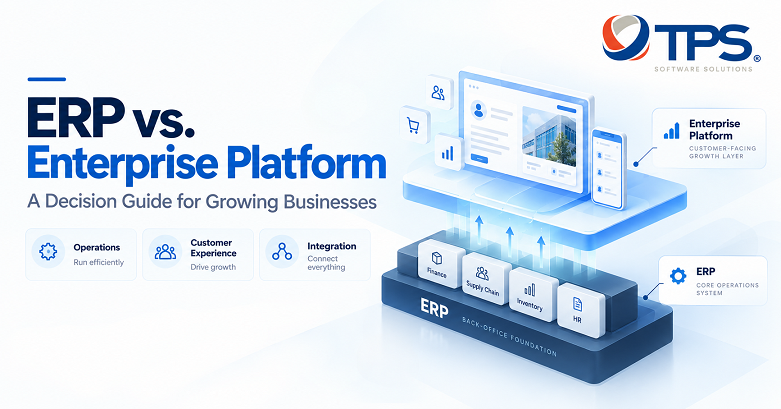
Every growing business hits the same inflection point: the ERP that ran everything starts struggling with customer-facing demands.
The question is not whether to evolve. The question is how: extend the ERP, or build a dedicated platform alongside it? This guide helps you decide.
When your ERP is enough
Your ERP can handle customer-facing functions if:
Many B2B companies with straightforward sales processes run successfully on ERP-based portals. If your ERP vendor offers a module that fits, and your growth rate is moderate, extending may be the right call.

When you need a separate platform
You need a dedicated platform when:
When several of these apply at once, the ERP becomes a bottleneck. Every new channel or customer feature turns into an ERP customization project, and each one adds risk to the next upgrade.
Building customer-facing commerce on top of an existing core system? Explore the TPS EC Platform and TPS's E-commerce Development Services.
The cost comparison
The two paths have very different cost curves. An ERP extension is cheaper to start. A dedicated platform is cheaper to run and change over the long term.
ERP Extension
Dedicated Platform
In short, an ERP extension costs less today, while a dedicated platform costs less to change tomorrow. The right choice depends on how fast your customer-facing needs will grow.
The integration architecture
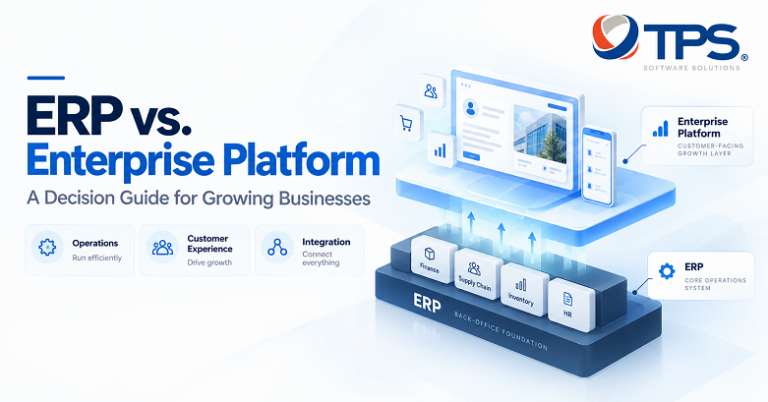
The best approach is not either/or. It is both, connected through APIs.

Each system does what it was designed for. The API layer keeps data in sync without tight coupling.
The ERP stays the system of record for back-office operations. The platform handles everything the customer touches.
The API layer between them is the critical investment. Clean, versioned APIs that sync data bidirectionally without tight coupling let each system change at its own pace. The ERP can be upgraded without breaking the storefront, and new customer features can ship without touching back-office logic.
Related read: ERP Integration: A Practical Guide for E-commerce Businesses covers data ownership, sync frequency and integration methods in detail.
Five questions to ask before deciding
If the answers point toward scale, speed and experience, build the platform.
Still choosing the core system itself? See How to Choose ERP Software: A Practical Selection Guide.
Our recommendation
Most companies we work with benefit from a hybrid approach: keep the ERP for what it does well (back-office operations), and build a purpose-designed platform for growth.
The platform is not a replacement. It is an expansion. The companies that get this right grow faster, because they are not fighting their ERP to do things it was never designed for.
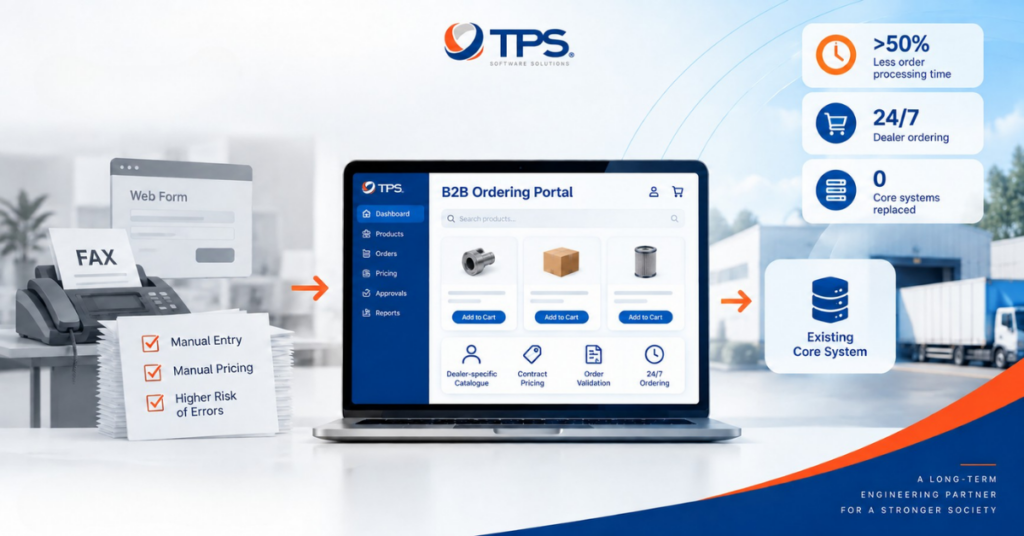
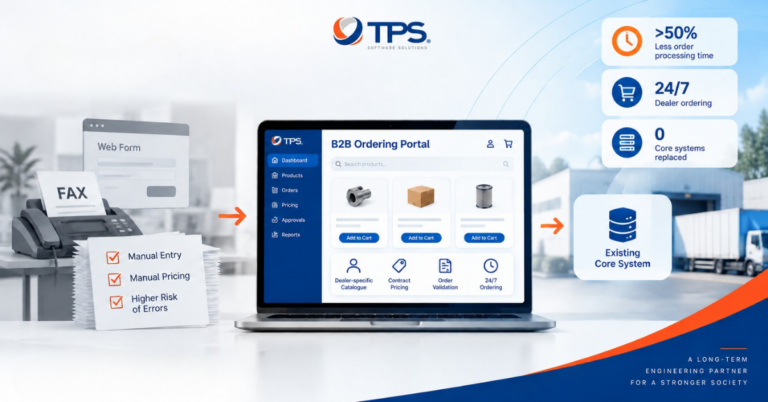
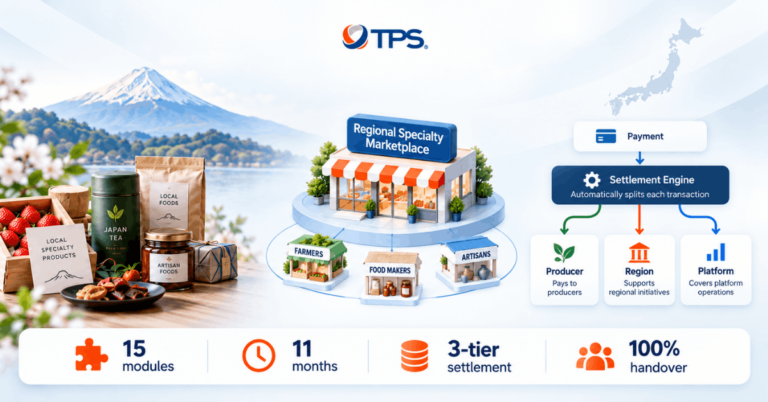
One example is a B2B supplier that put a modern ordering portal in front of its existing core system instead of replacing it.
FAQs about ERP extension vs. dedicated platform
1. Can an ERP handle e-commerce and customer portals on its own?
Yes, when the customer base is small, transactions are standardized and you sell through one or two channels. ERP-based portals work well for many B2B companies with straightforward sales processes.
2. When does extending the ERP become too expensive?
When customizations start breaking during upgrades, feature requests wait on ERP release cycles, and each new channel needs another custom module. At that point the lower upfront cost is outweighed by maintenance and lost speed.
3. Does a dedicated platform replace the ERP?
No. The ERP stays the system of record for finance, inventory, procurement and HR. The platform handles customer-facing functions and syncs with the ERP through APIs.
4. What data should sync between the ERP and the platform?
Typically product and pricing data flows from the ERP to the platform, orders flow from the platform to the ERP, and inventory and fulfillment status are kept in sync. Each data type should have one clear system of record.
5. How do we start if we are unsure which path fits?
Answer the five questions above with real projections for volume, channels and release frequency. Then compare the multi-year cost of ERP customization against platform development, not only the upfront cost.
Not sure whether to extend your ERP or build a platform?
Bring your current ERP and your growth plans. TPS maps your integration points and comes back with a written view of the options, from extending what you have to building a dedicated platform around it.
BOOK A 30-MIN ASSESSMENT