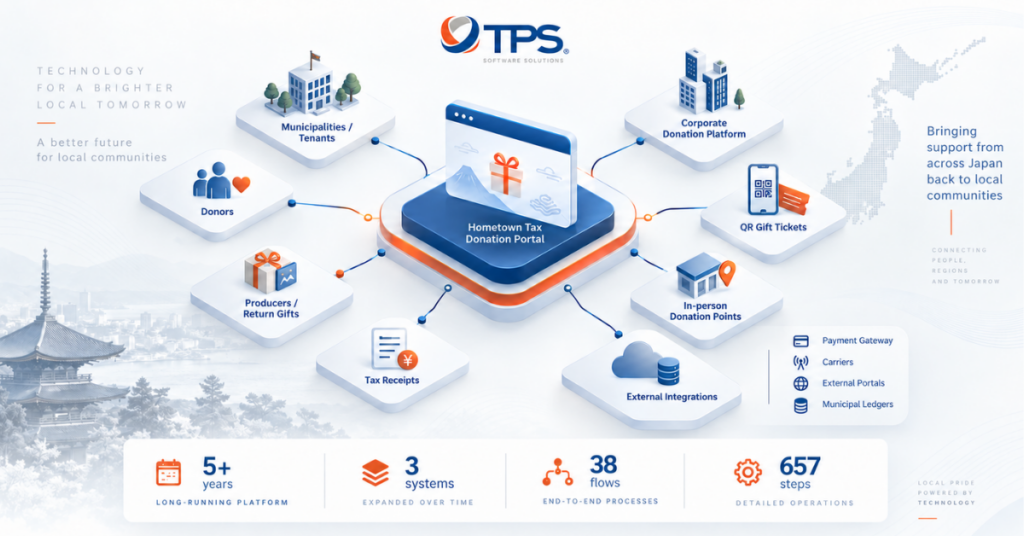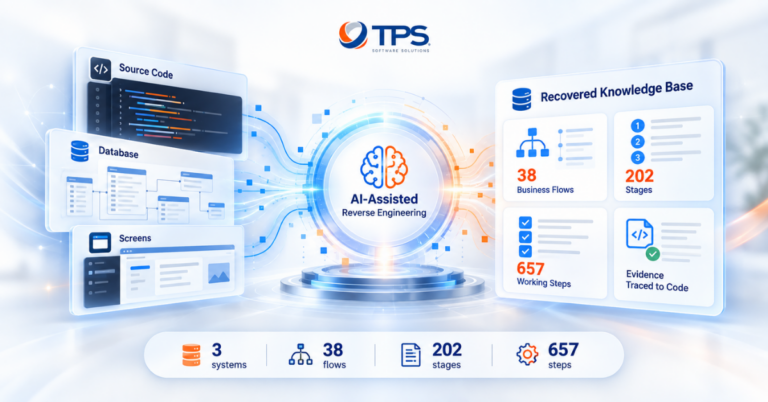
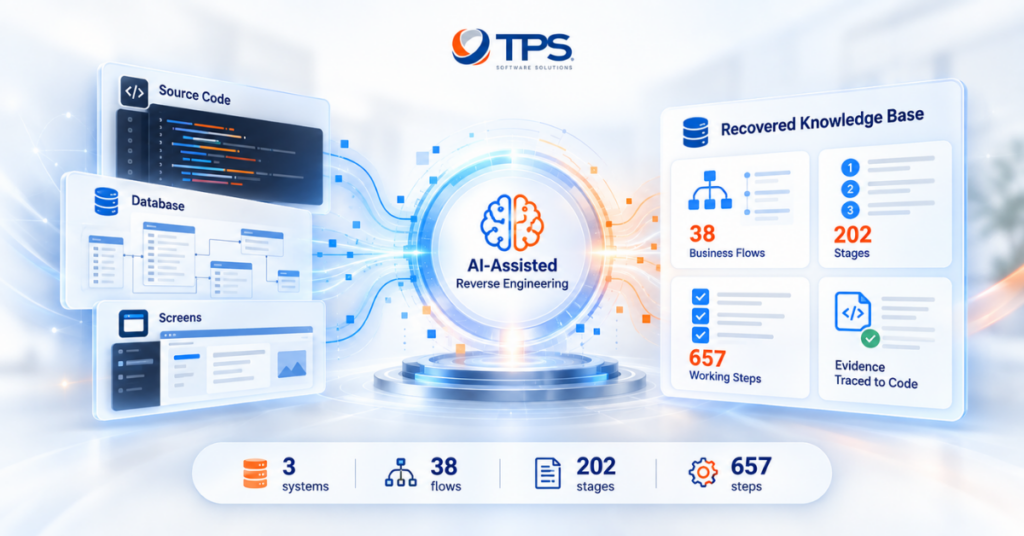
TPS used AI-assisted reverse engineering to recover the real business requirements of three production systems from their code, organizing them into 38 business flows, 202 stages and 657 evidence-linked working steps.
About the client
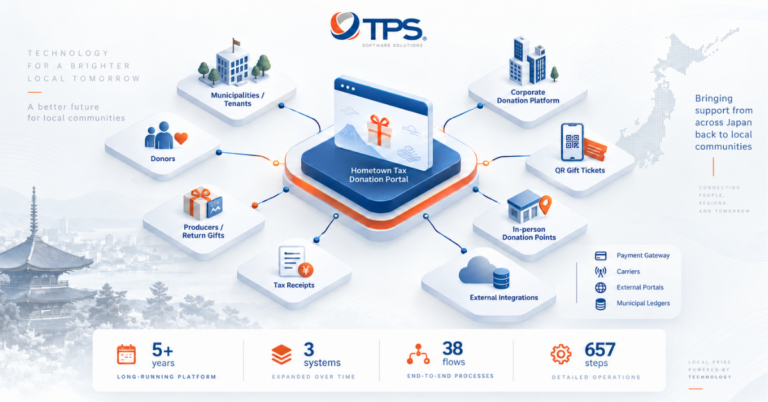
The client operates the hometown tax donation platform described in TPS's related case study. The platform comprises three production systems that have undergone more than five years of continuous development and operational changes.
A standing TPS engineering team has supported the platform as it expanded from its original donation portal into a broader ecosystem.
Challenges
After years of continuous development, the platform's specifications no longer fully reflected its actual behavior. Critical business knowledge existed in source code and in the experience of individual team members.
Outdated specifications
The platform had evolved continuously, but its technical and business documentation had not kept pace with changes in production.
Undocumented business rules
Important operational behavior was embedded in source code and individual engineers' knowledge rather than maintained in an accessible knowledge base.
Uncertain modernization scope
Before making modernization decisions, the team needed to establish what each production system actually did.
Repeated knowledge discovery
Engineer onboarding and integration replacement required teams to rediscover existing rules and system behavior.
Solution
TPS applied an AI-assisted reverse engineering method to recover the platform's AS-IS requirements from three production systems. The recovered knowledge was organized around business processes, with each working step linked to evidence in the code.
Analyze the sources
Examine source code, database structures and application screens using TPS's AI-assisted reverse engineering approach.
Recover business rules
Organize the recovered behavior into end-to-end business flows, named process stages and detailed working steps.
Link every step to evidence
Attach findings from the code to each working step, allowing engineers to trace a documented process back to its implementation.
Maintain a living knowledge base
Update the recovered requirements in versioned rounds as the production platform evolves, rather than treating documentation as a one-time deliverable.
A structured recovery process connects existing implementation details with documented business behavior and supporting evidence.
Database structures
Application screens
Recover business rules
Organize system behavior
Source code, database structures and screens are analyzed to recover business behavior. The resulting documentation links each working step to implementation evidence.
Illustrative example of how a reader can navigate the recovered requirements, from business behavior down to supporting code evidence.
Example of the documentation structure used to connect business processes with implementation evidence.
Results
The engagement produced a structured, evidence-linked view of the platform's existing behavior across three production systems.
Recovered requirements across three systems
38 business flows, 202 process stages and 657 working steps were recovered and organized into one knowledge base.
Traceable business rules
Each flow is documented with its trigger, outcome and stage checkpoints. Working steps are linked to supporting code evidence.
Broad operational coverage
Documentation covers onboarding, catalogues, ordering, payment, fulfilment, settlement, tax documents, access control, releases and incident handling.
Continuously maintained knowledge
The recovered requirements are maintained through versioned updates as the production platform changes.
Coverage across the donation portal, corporate donation platform and gift ticket system.
Donation Portal
Corporate Donation Platform
Gift Ticket System
All three systems are covered by one evidence-linked, versioned knowledge base.
Why it matters for you
Effective modernization starts with understanding the system you already have. Recovering business requirements directly from source code creates an evidence-based AS-IS picture. That knowledge supports future modernization decisions, engineer onboarding and integration changes, and remains a deliverable the client can retain.
Start with a 30-minute assessment
Bring your current system and the question you are trying to answer. TPS comes back with a written view of options, not a sales deck.
BOOK A 30-MIN ASSESSMENTApplication Modernization · AI-Assisted Reverse Engineering