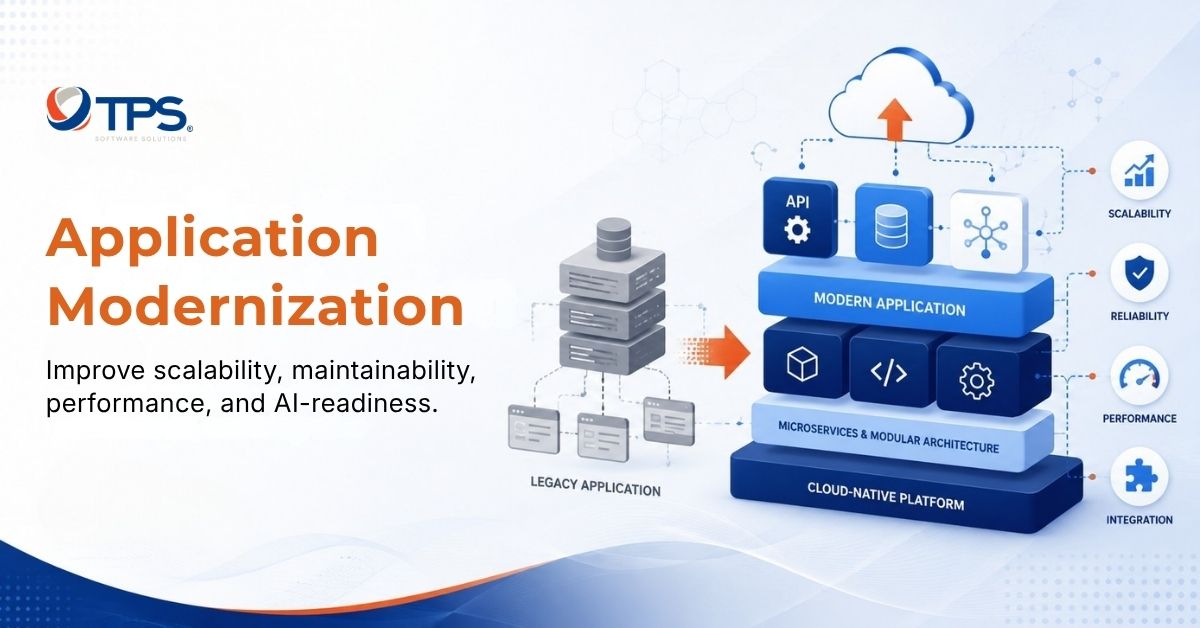
Application modernization helps businesses improve existing applications to reduce technical debt, support growth, and adapt to cloud, integrations, and AI initiatives.
It can involve changes to the codebase, architecture, infrastructure, data, APIs, security, and development processes.
This guide covers the main modernization approaches, supporting technologies, and process from assessment to optimization.
What Is Application Modernization?
Application modernization is the process of updating and improving an existing software application to enhance its performance, scalability, security, maintainability, and ability to support changing business requirements.
Modernization does not necessarily mean rebuilding an entire application from scratch. Depending on the system and business goals, it may involve changes to one or several areas, including:
- Application architecture: improving how the system is structured to make it easier to scale, maintain, and extend.
- Codebase: refactoring or upgrading code, frameworks, and dependencies.
- Infrastructure: moving to more flexible infrastructure such as cloud or container-based environments.
- Data: improving databases, data flows, accessibility, and data quality.
- APIs and integrations: connecting applications more effectively with internal and external systems.
- Development and delivery: improving testing, CI/CD, DevOps practices, and release processes.
- Security: addressing outdated components, vulnerabilities, and evolving security requirements.
The goal is not simply to adopt newer technology. Effective modernization should make an application easier to operate, safer to change, and better able to support the business as requirements evolve.

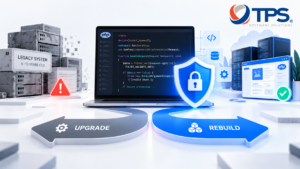
See how TPS modernized an existing application: Revamping Legacy Infrastructure for Enhanced Functionality
Why Modernize Applications?
Applications often become harder to support as business requirements, user expectations, and technology environments change. Modernization helps organizations address these limitations without unnecessarily replacing systems.
Common reasons to modernize an application include:
- Improve scalability and performance: Modern architectures can help applications handle growing users, transactions, data, and workloads more efficiently.
- Reduce technical debt: Updating outdated code, dependencies, and system structures can reduce recurring maintenance issues and make future changes easier.
- Accelerate software delivery: Better architecture, automated testing, and modern DevOps practices can shorten development and release cycles.
- Strengthen security: Modernization provides an opportunity to address outdated components, vulnerabilities, and changing security requirements.
- Simplify integrations: Modern APIs and integration patterns make it easier to connect applications with business systems, third-party services, and data sources.
- Reduce maintenance effort: More maintainable systems allow engineering teams to spend less time resolving recurring issues and more time delivering new capabilities.
- Support evolving business needs: Modernized applications are generally easier to adapt when organizations introduce new products, workflows, markets, or technologies.
Ultimately, the value of application modernization comes from improving how effectively software supports the business, not simply from replacing older technologies.
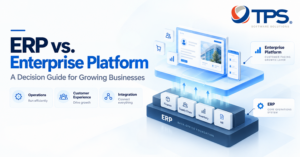
See how TPS modernized an existing application:
Common Application Modernization Approaches
There is no single approach to application modernization. The right option depends on the application’s current condition, business goals, technical constraints, budget, and the level of change required.
| Approach | What It Means | When It May Be Suitable |
|---|---|---|
| Rehost | Move the application to a new infrastructure environment with minimal changes to the code. | When the main goal is to change infrastructure quickly without redesigning the application. |
| Replatform | Move the application to a new platform while making limited changes to improve performance, scalability, or operations. | When organizations want more benefits than rehosting without a major rebuild. |
| Refactor | Restructure or improve the existing code without changing the application’s core functionality. | When technical debt, maintainability, or development speed has become a problem. |
| Rearchitect | Redesign the application architecture to improve scalability, flexibility, resilience, or integration. | When the current architecture limits future development or business growth. |
| Rebuild | Recreate significant parts, or all, of the application using a new architecture and technology stack. | When the existing system can no longer support required capabilities effectively. |
| Replace | Retire the current application and move to another product or platform. | When continuing to modernize the existing application would provide limited business value. |
In practice, modernization projects may combine several approaches. For example, one part of an application may be refactored while another is rearchitected or moved to a new platform.
The key is to choose the level of modernization that addresses the actual business and technical problems, rather than applying the most extensive transformation by default.
Related read: Application and Data Migration: A Comprehensive Guide
How Does the Application Modernization Process Work?
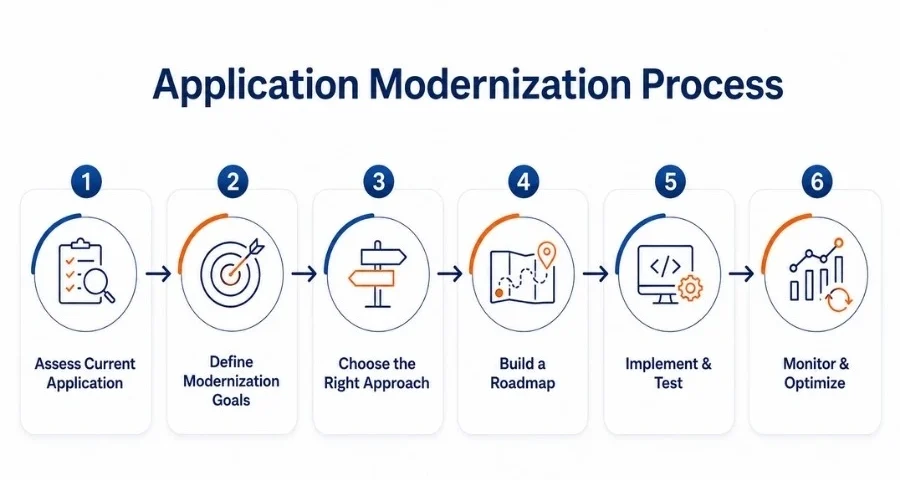
Application modernization works best as a structured process rather than a series of isolated technology upgrades. Before changing code, infrastructure, or architecture, organizations need to understand how the current application works, what problems need to be solved, and which changes will create the most value.
Assess the current application
The process typically begins with a detailed assessment of the application’s current state. This includes reviewing the architecture, codebase, infrastructure, data, integrations, security, performance, testing processes, and major system dependencies.
The assessment should also consider the business context. A technical limitation may be highly critical in one application but less important in another depending on how the system supports operations, customers, revenue, or future growth.
The goal is to identify the main constraints, risks, dependencies, and opportunities before deciding what should actually be modernized.
Define modernization goals
Once the current state is understood, the next step is to define what the modernization initiative is expected to achieve.
The goal may be to improve scalability, reduce maintenance effort, strengthen security, accelerate releases, simplify integrations, lower operating costs, or make the application easier to extend as business requirements change.
These goals should be specific enough to measure. For example, if the objective is faster software delivery, success can be evaluated through metrics such as deployment frequency, lead time for changes, or the time required to release new functionality.
Choose the right modernization approach
The modernization approach should be selected based on the problems identified during the assessment and the outcomes the organization wants to achieve.
Some applications may only require infrastructure or platform changes, while others may need deeper code or architectural improvements. In practice, a project may combine several approaches, such as replatforming one component while refactoring or rearchitecting another.
The key is to choose the level of change that provides sufficient business and technical value without introducing unnecessary cost, complexity, or risk.
Build a modernization roadmap
The chosen strategy then needs to be translated into a practical roadmap.
A modernization roadmap defines what should be addressed first, how different components depend on each other, what the target state should look like, and how the work will be divided into manageable phases.
For larger applications, prioritization is especially important. Modernizing everything at once can increase risk and disruption, while a phased approach allows teams to focus first on the most critical or valuable areas and validate progress along the way.
Implement and test incrementally
Implementation may involve changes to the codebase, architecture, infrastructure, data layer, integrations, deployment processes, or a combination of these areas.
Testing should take place throughout the modernization effort rather than only at the end. Functional behavior, integrations, performance, security, and data integrity all need to be validated as changes are introduced.
Where possible, incremental delivery helps reduce risk by allowing teams to release, test, and evaluate smaller changes before moving to the next phase.
Monitor and optimize
After deployment, organizations should continue monitoring whether the modernization effort is producing the expected results.
This may include tracking application performance, reliability, operating costs, incident rates, deployment speed, maintenance effort, and the ability to deliver new functionality.
The findings can then be used to optimize the application further or guide the next phase of modernization.
Application modernization is therefore not simply a one-time technical upgrade. It is an ongoing process of improving how effectively software supports the business as technology and requirements continue to evolve.
How to Choose the Right Application Modernization Strategy
The best modernization strategy depends on both the technical condition of the application and the value it delivers to the business. Before choosing an approach, organizations should evaluate a few key factors:
- Business value: How important is the application to core operations, revenue, customer experience, or future growth?
- Technical condition: What are the main limitations in the current architecture, codebase, infrastructure, or integrations?
- Change requirements: What capabilities need to be improved or added?
- Dependencies: Which systems, data sources, and business processes depend on the application?
- Risk: How much disruption can the organization tolerate during modernization?
- Cost and expected value: Is the expected business and technical improvement worth the level of investment required?
Not every application requires a full rebuild. In some cases, replatforming or refactoring may solve the most important problems with lower cost and risk. In others, deeper architectural changes may be necessary.
A strong modernization strategy focuses on the problems that matter most, prioritizes changes based on business impact, and avoids unnecessary transformation.
What Technologies Support Application Modernization?
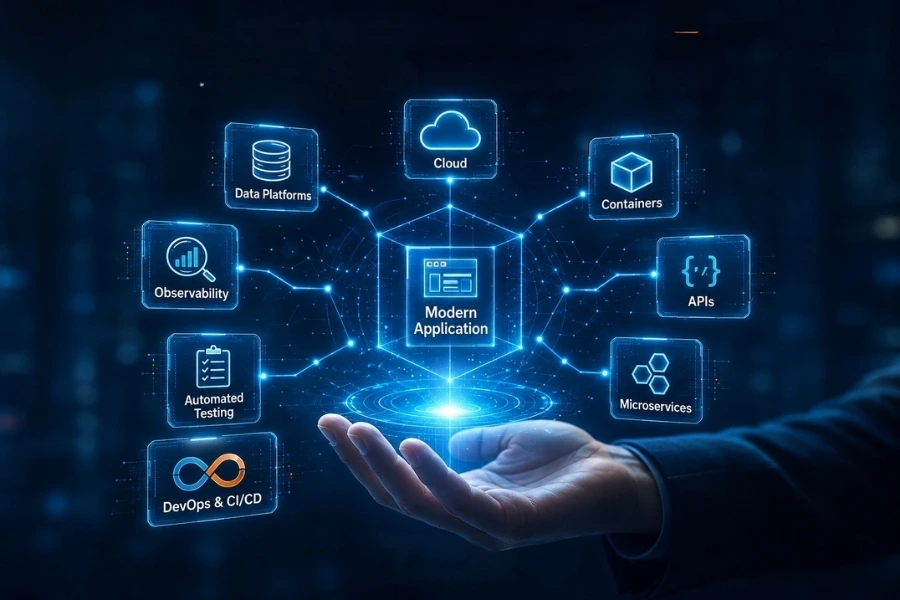
Application modernization can involve different technologies depending on the system, modernization goals, and target architecture. Common technologies include:
- AI-powered engineering tools: Can support tasks such as code analysis, documentation, refactoring, test generation, and developer productivity during modernization.
- Cloud computing: Provides flexible infrastructure, managed services, and easier scalability for applications with changing workloads.
- Containers: Package applications and their dependencies into portable environments, making deployment more consistent across development, testing, and production.
- Microservices and modular architectures: Divide large applications into smaller, independent components so teams can develop, deploy, and scale them more efficiently.
- APIs: Enable applications to exchange data and functionality with internal systems, third-party platforms, and new digital services.
- DevOps and CI/CD: Automate development, testing, and deployment processes to help teams release changes faster and more reliably.
- Automated testing: Reduces the risk of modernization by validating application behavior as code, architecture, or infrastructure changes.
- Observability and monitoring: Provide visibility into application performance, errors, dependencies, and system health before and after modernization.
- Modern data platforms: Improve how applications store, access, integrate, and process data, especially when older data structures limit new capabilities.
Not every modernization project requires all of these technologies. The technology stack should be selected based on the application’s actual constraints and the business outcomes the organization wants to achieve.
Explore when microservices may be the right architecture: Exploring the Power of Microservices Architecture
Modernize Your Applications with TPS Software
TPS Software helps organizations modernize existing applications to improve scalability, maintainability, performance, integration, and readiness for future business needs.
Our application modernization services can address different parts of the system, including application architecture, codebase, data, APIs and integrations, cloud infrastructure, DevOps processes, testing, security, and technical documentation. Rather than applying a one-size-fits-all approach, TPS assesses the current system and business priorities to define a practical modernization roadmap and the right level of change.
Whether the goal is to reduce technical debt, improve delivery speed, strengthen system reliability, simplify integrations, or create a stronger foundation for new capabilities such as AI, TPS combines software engineering and technology consulting to support modernization from assessment through implementation.
Planning an application modernization initiative? Talk to our team to discuss your current system and modernization goals.
FAQs About Application Modernization
1. What is application modernization?
Application modernization is the process of improving an existing software application so it can better meet current business and technical requirements. It may involve changes to the code, architecture, infrastructure, data, integrations, security, or development processes.
2. What is the first step in application modernization?
The first step is usually an application assessment. This helps identify technical limitations, dependencies, risks, business priorities, and the areas that would benefit most from modernization.
3. How do you choose the right application modernization approach?
The right approach depends on factors such as business value, technical condition, required capabilities, system dependencies, risk tolerance, budget, and expected outcomes. Some applications may only need limited refactoring or replatforming, while others may require deeper architectural changes.
4. Does application modernization require moving to the cloud?
No. Cloud migration can be part of application modernization, but organizations do not always need to move applications to the cloud. They can also modernize applications by refactoring code, improving architecture, developing APIs, strengthening security, enhancing testing, or upgrading development and deployment processes.
5. How long does application modernization take?
The timeline varies depending on the size and complexity of the application, the modernization approach, system dependencies, data migration requirements, testing needs, and the scope of change. Smaller improvements may be completed incrementally, while larger modernization programs may require multiple phases.
6. How much does application modernization cost?
Application modernization costs depend on factors such as application complexity, modernization scope, target architecture, infrastructure changes, integrations, data migration, testing, and required engineering resources. A detailed assessment is usually needed before estimating the investment accurately.
TPS Software