
PROBLEM 01
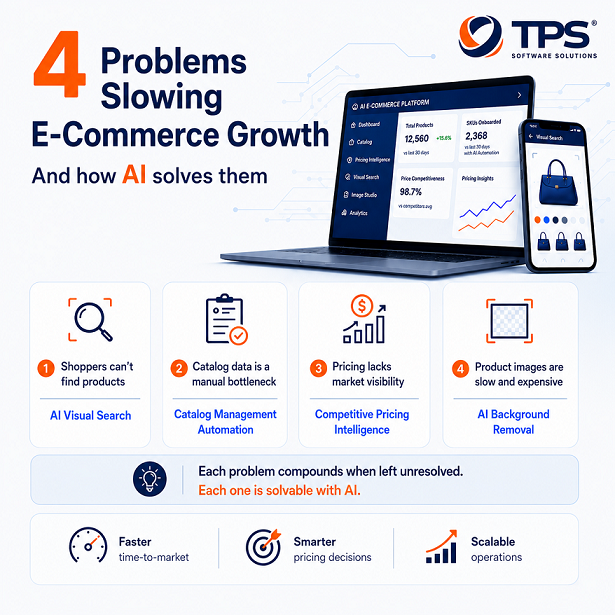
Shoppers can’t find what they’re looking for
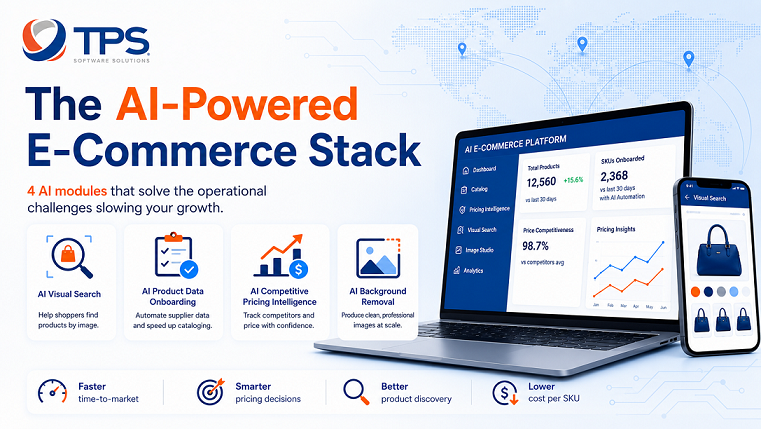
Keyword search fails when shoppers can’t name the product or describe visual features. Up to 30% abandon a no-result search — not because the product is missing, but because they couldn’t describe it.

Product data operations are a manual bottleneck
Supplier data arrives in dozens of formats. Teams spend hundreds of hours per quarter manually mapping, cleaning, and uploading. The result: slow onboarding, human errors, and a catalog that always lags behind the business.

Pricing decisions are made without market visibility
Most e-commerce teams set prices based on internal cost structures and gut feel. Competitor pricing changes daily. Without automated monitoring, businesses are always reacting instead of positioning.

Product images are slow and expensive to produce
Studio setups, photographers, post-production — for catalogs with thousands of SKUs, photography is a major cost and a constant bottleneck.
Module 1: AI Visual Search
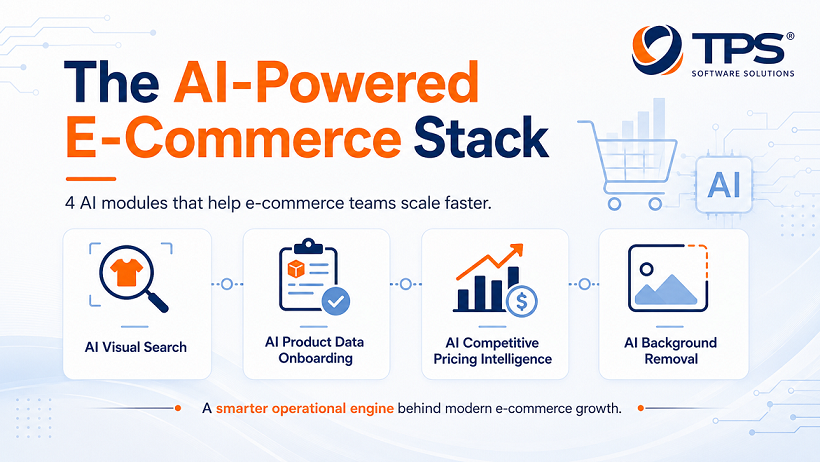
TPS AI Visual Search removes the keyword barrier entirely. A shopper uploads a photo — from their phone, a screenshot, a magazine clipping. The AI detects objects within the image, isolates the target product, and retrieves visually similar items from the catalog. Results refine by color, category, and attributes.

- Faster product discovery — fewer abandoned searches
- Higher search accuracy — results match intent, not just keywords
- Improved conversion — shoppers who find what they want buy more
Module 2: AI Product Data Onboarding
Supplier data — in any format — is ingested by the system. AI extracts product attributes, maps them to your predefined schema, normalizes inconsistencies, and loads clean, structured data directly into your PIM. A feedback loop continuously improves accuracy over time.

The four-step pipeline:
- Ingest — accept supplier data from any source and format
- Extract — AI reads and understands product information
- Map — align extracted data to your internal schema
- Load — normalize and push to PIM, OMS, storefront, warehouse
Business impact:
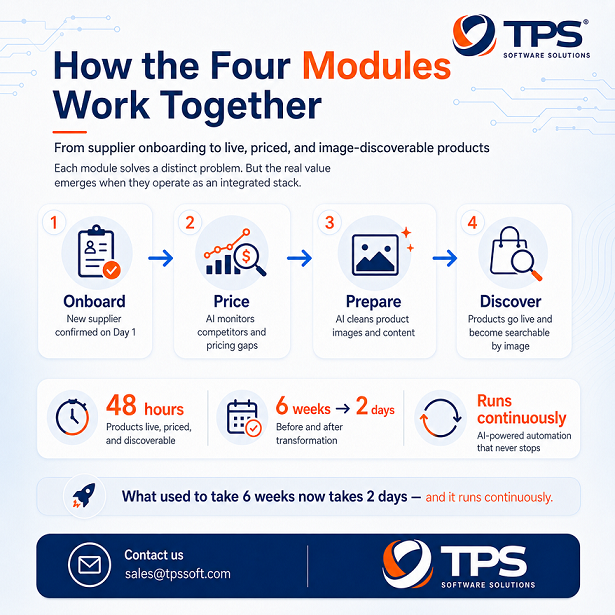
- 2,000 SKUs from 8 suppliers processed in under 15 minutes
- Near-zero manual error rate
- New supplier onboarding in days, not weeks
Module 3: AI Competitive Pricing Intelligence
The system continuously collects pricing data from competitor platforms, matches equivalent products using AI similarity and semantic matching, analyzes gaps and trends, and surfaces actionable pricing insights.

- Competitive and dynamic pricing based on real market data
- Faster decision-making — no more manual price checking
- Increased conversion — right price at the right time
Module 4: AI Background Removal
Raw product images are uploaded via PIM. AI processes them in batch — removing backgrounds, performing basic retouching, and delivering clean, professional images ready for any platform.

- Reduced manual effort — no photo studio required
- Faster product listing — images ready in minutes, not days
- Consistent image quality across the entire catalog
 Book a 30-minute session: